UBC Education professor re-imagines university housing for “living, learning, and working together in more equitable ways.”

UBC Education professor re-imagines university housing for “living, learning, and working together in more equitable ways.”

October 21, 2021

Written by Heidi Rennert

Dr. Michelle Stack has forged a formidable career path in education, government, advocacy and academia–but for her latest project, she’s returning to her roots. 

Before entering academia, she worked in policy positions and as an adult educator, and then as a communications director in an office that, investigated child deaths and reviewed plans for children in care. She now works as an associate professor in the Department of Educational Studies, a position from which she continues to engage actively with the public. As a public commentator, she has regularly appeared in news programs and several CBC radio channels (CBC 180, BC Almanac, On the Coast, and The Early Edition), and her work has been featured in The Globe and Mail, the National Post, and the Conversation. Her interests are wide-ranging: for the Conversation, for instance, she has written on the Nobel Prize, university rankings (also the focus of her book-length study), ableism and the classroom, and white supremacy in the academy. As an educator, she similarly encourages students to think creatively about their scholarship by adopting public-facing mediums like the op-ed or stand-up comedy. 

But Dr. Stack’s interest in education and public scholarship has much earlier beginnings. “Growing up in a housing co-operative (a long time ago),” she reflects, “very much influences my research and ways of thinking about public scholarship.” 

One of her latest (of many) projects, Co-operatives on Campus, seeks to promote affordable student housing on campuses through housing co-operatives. She wrote about university co-op housing for the Conversation in 2021, in conjunction with her study published in the International Review of Education that same spring. She’s currently producing a podcast (an episode can be found here), and held a series of webinars on housing co-ops with the Peter Wall Institute. As she notes in one of the series’ webinars, co-ops and universities can unite and expand a shared vision of “living, learning, and working together in more equitable ways.”

Dr. Stack was recently awarded the Public Engagement Award (PEA) by the Public Humanities Hub. In the following interview, Dr. Stack reflected on public scholarship in the context of her current project with housing co-operatives on university campuses. 


Briefly describe your project(s). Who were your collaborators in this project? What were/are your project goals?

The project I am most excited about is Co-operatives on Campus. I have had the opportunity to work with colleagues from BC and beyond, including– 

  • Drs. Bathseba Opini, André Mazawi and Deirdre Kelly from UBC Education 
  • Shirley Lew, Dean School of Arts and Sciences at Vancouver Community College and UBC Doctoral Student
  • Ben Hyman, President of the BC Cooperative Association and Executive Director for Vancouver Island Regional Library, 
  • Elvy del Bianco, Program Manager, Co-op Partnerships from Vancity
  • Dr Cilla Ross, from the University of Nottingham and Cooperative College in the UK 
  • Dr. Jiaying Zhao from UBC Psychology and Institute for Resources, Environment and Sustainability (IRES).

We held webinars in conjunction with UBC’s Alma Mater Society (AMS), which is doing some great work on affordable housing for students, including the possibility of co-operatives. 

I’m just finishing off some podcasts that explore the possibilities of co-operative post-secondary institutions and co-operatives within post-secondary institutions. The project has led to some great opportunities to meet other researchers and advocates in the area including the Community Learning Office at UBC to develop a project with students focused on climate justice and the possibilities of co-operatives. I’m also part of a group Vancity is leading on improving co-op infrastructure in BC. 

Through the project, we came to learn about the cutting-edge work on co-operatives by Dr. Shenaz Hossein. I highly recommend her piece Banker Ladies

What are some of the challenges presented by public scholarship? 

Time and narrow metrics. 

Occasionally, like others I know who engage in critical public work, I get told that public scholarship isn’t “real” scholarship. This is a sadly outdated notion of scholarship that puts universities in danger of being seen as irrelevant and lessens our capacity to expand urgently needed public conversations. 


Another challenge is that critical public scholarship is often not recognized in hiring and tenure and promotion processes.  

The obsession with simple metrics is a problem. Public scholarship takes time to build relationships, and the benefits and risks associated with it depend on the area of scholarship. I think of disability rights scholars who recently fought against the expansion of Medical Assistance in Dying. Major disability rights groups in Canada opposed the legislation, yet they received relatively little media attention compared to non-disabled politicians, legal and health care professionals. Does this mean they were ineffective? No, not at all, but it does mean that ableism is very strong in our society. We need to be careful about creating simplistic metrics for public scholarship that may further marginalize scholars who are doing courageous public scholarship. 


What are your future plans for the project?   

To work more in collaboration with students and staff on the idea of co-operatives.  I can see bringing people together across the post-secondary system to expand our ways of structuring how we live, play and work together. When I’m giving talks or teaching, I sometimes ask who is part of the university community. I hear students, faculty, and administrators but less often included workers who keep higher education going – the cleaners, gardeners, cafeteria staff, and early childcare educators.  I’ve talked to cleaners at UBC who would love to live on campus but have long commutes by Skytrain and buses because they can’t afford to. This is not fair to these workers, but it is also limiting our ability as a community to be a place to try out more equitable ways of being together that is based on much of the significant research done at UBC.  


Dr. Michelle Stack (she/her/hers) is a 2021 recipient of the Hub’s Public Engagement Award and an Associate Professor in UBC Department of Educational Studies. View her faculty profile for more information.
 

The Lives of Characters in Dostoevsky and Tolstoy

Oct 20, 2021 | Dr. Chloë Kitzinger (Rutgers) will be giving a free, public, online talk on “The Lives of Characters in Dostoevsky and Tolstoy”. Part of the Dostoevsky 200 series of events to mark the bicentenary of Russian writer Fyodor Dostoevsky, organized by the North American Dostoevsky Society. Co-sponsored by the Public Humanities Hub.

Religion, Law & Society Roundtable


DATE: October 14, 2021

TIME: 4:00pm – 6:00pm

LOCATION: Online


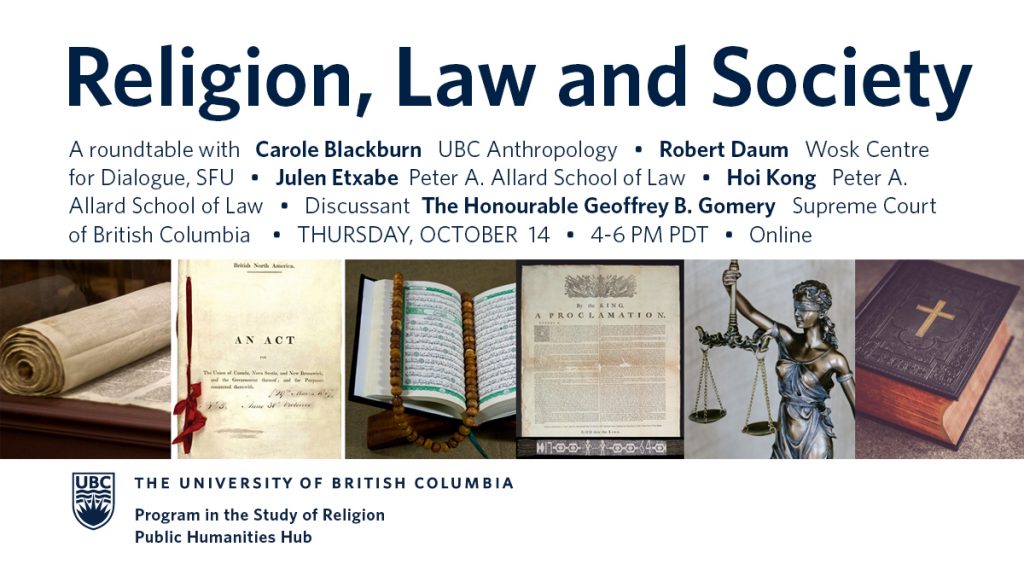
Collaged photos of the Torah, British North America Act from Parliament of Canada, Qur'an, Royal Proclamation 1763 from Library and Archives Canada, 1764 Covenant Chain Wampum Belt from the Canadian Museum of History, Lady Justice statuette, and the Bible, advertising the "Religion, Law and Society" roundtable sponsored by the UBC Program in the Study of Religion and Public Humanities Hub

The UBC Program in the Study of Religion and the Public Humanities Hub are pleased to present a roundtable of scholars discussing Religion, Law and Society.

Presenters

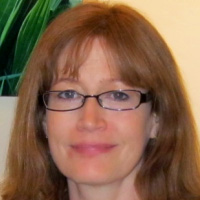
Carole Blackburn, smiling at the camera, wearing glasses, in front of a wall on which an image with vibrant green leaves is hung
Carole Blackburn
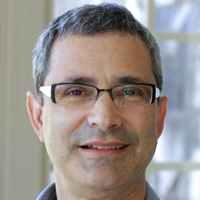
Robert Daum smiling at the camera, wearing glasses, in front of a white-paned window
Robert Daum
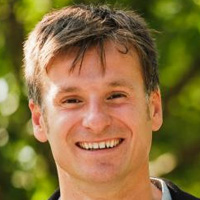
Julen Etxabe smiling at the camera, with out of focus green tree leaves in the background
Julen Etxabe
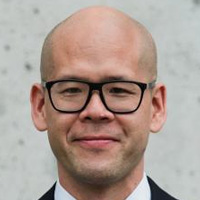
Hoi Kong smiling at the camera wearing black-rimmed glasses, white collared shirt and dark jacket
Hoi Kong

Carole Blackburn, Associate Professor of Anthropology

Title: Defending Grizzly Bear Spirit in Canadian Courts: Ktunaxa First Nation v. British Columbia

This paper addresses the challenge of protecting the religious freedom rights of Indigenous peoples in Canadian courts. In 2017 the Ktunaxa First Nation appealed to the Supreme Court of Canada to prevent the construction of a ski resort in Jumbo Valley in southeastern British Columbia. For the Ktunaxa, Jumbo Valley is a sacred site that is home to Grizzly Bear Spirit. They argued that the construction of the resort would cause Grizzly Bear Spirit to leave the area and that this would violate their Charter right to freedom of religion. The majority of the Supreme Court ruled that Section 2(a) of the Charter protects freedom of belief but not the actual objects of belief, like Grizzly Bear Spirit. In this paper I draw attention to the conceptual gap between land-based spiritual beliefs and an approach to religion as an individualized practice separate from place that is reflected in this judgment.

Bio: Dr. Carole Blackburn is an Associate Professor in the Department of Anthropology at UBC. Her research focuses on law and rights as tools that Indigenous people use to mediate their relationships with states. Dr. Blackburn has written on the legal, political and cultural consequences of treaty making in Canada and the challenges of litigating loss of culture in residential school litigation.

Robert Daum, Fellow, Wosk Centre for Dialogue, Simon Fraser University

Title: Harmful Speech: Aspects of Rabbinic teachings about intent, impact and culpability

Rabbinic analysis of problematic speech is an intriguing subject, given the importance of speech as a poetic device and literary motif in the biblical tradition, the force of verbal utterances in rabbinic jurisprudence, and the prestige of learned oral discourse as a social practice in rabbinic culture. Premodern Jewish traditions consider slander, gossip, and deceit from the academy to the marketplace. These sources also problematize ostensibly unverified legal traditions. They deride insufficiently critical, scholarly discussion. They flag the danger of senior judges intimidating junior colleagues. They lament lost or “forgotten” teachings by marginalized scholars. They condemn speech calculated to cause public shame. One undefined category of tort law, “verbal wronging”, is applied to subtle cases, where it is impossible to prove intentional infliction of commercial or personal harm. This material might be usefully applied to present-day considerations of intent, impact, and culpability in cases of micro-aggression and related issues.

Bio: Robert A. Daum (PhD, UC Berkeley) is a Fellow at SFU’s Wosk Centre for Dialogue. He researches rabbinic legal literature and history, talmudic poetry, gender and queer studies, authority construction, hate crime, comparative religion and human rights. He collaborates with universities and governments to advance EDI+ and reconciliation.

Julen Etxabe, Assistant Professor and Canada Research Chair (Tier 2) in Jurisprudence and Human Rights, Allard School of Law

Title: What’s the scandal? The tension between religious autonomy, human rights and the state

In this presentation I will speak about Fernández Martínez v. Spain, a decision by the European Court of Human Rights concerning a catholic priest and teacher of religion who was fired from his teaching post for the “scandal” of being married. As member of the Movement for Optional Celibacy, the priest had applied for a dispensation from the Vatican a decade earlier without response, but was fired from his teaching post soon after a local newspaper made his condition public. In a close 9 to 8 split decision, the Grand Chamber found no violation of the applicant’s rights.

My presentation will address some of the challenges of the decision, including the obligation to strike a proper balance between the autonomy of religious organizations and the fundamental rights of their members, such as the right to private life (Art 8) and non-discrimination on account of marital status (Art 14). My comments will center on the religious notion of “scandal” and on whether freedom of religion bars the state from inquiring into the circumstances giving rise to it.

Bio: Julen Etxabe is Assistant Professor and Canada Research Chair (Tier 2) in Jurisprudence and Human Rights at Allard School of Law. He is the author of The Experience of Tragic Judgment (Routledge 2013) and the editor of three other books, including Cultural History of Law in Antiquity (Bloomsbury, 2019) and Rancière and Law (Routledge 2018). His current project seeks to unearth a dialogical form of judgment emerging in the context of International Human Rights.

Hoi Kong, The Rt. Hon. Beverley McLachlin, P.C., UBC Professor in Constitutional Law
Peter A. Allard School of Law

Title: What’s Law Got to Do With It? Religion Through the Lens of Law

Freedom of religion aims at two goals: preventing the state from interfering with religious beliefs and practices, on the one hand, and requiring the state to remain neutral with respect to religions, on the other.  Yet in some circumstances, these two goals will conflict.  For instance, neutral laws will in some instances interfere with religious beliefs and practices.  When courts adjudicate these kinds of cases, does one of these goals necessarily take precedence over the other?  This presentation will attempt to answer this question and illuminate the question’s significance for our understanding of the relationship between law and religion.

Bio: Professor Hoi Kong is the inaugural holder of The Rt. Hon. Beverley McLachlin, P.C., UBC Professorship in Constitutional Law, which he assumed in 2018. He researches and teaches in the areas of constitutional, administrative, municipal and comparative law, and constitutional and public law theory. He has also taught at McGill University’s Faculty of Law, where he served a term as Associate Dean (Academic), at Queen’s University, and at the Columbia Law School. Professor Kong clerked for Justice L’Heureux-Dubé and Justice Deschamps at the Supreme Court of Canada.

Discussant

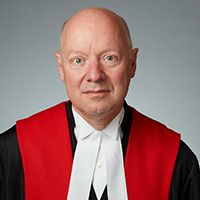
Justice Geoffrey B. Gomery wearing black, red, and white judicial robe

The Honourable Geoffrey B. Gomery, Justice, Supreme Court of British Columbia

Bio: The Hon. Justice Gomery received his LLB from the University of Toronto in 1983 and a Bachelor in Civil Law from Oxford University in 2005. He practiced as a partner with Nathanson, Schachter & Thompson LLP and became Queen’s Counselor in 2010. He became a Fellow of the Chartered Institute of Arbitrators in 2018. Since 2012, he has served as an Adjunct Professor at the University of British Columbia, teaching a course he created on the law of restitution. In 2018, he was appointed Justice of the Supreme Court of British Columbia.