Dr. Hessam Dehghani discusses the UBC Persian Literature Reading Club and his plans for future projects.
UBC professor grows online community with modern Persian literature
Written by Heidi Rennert
March 29, 2022
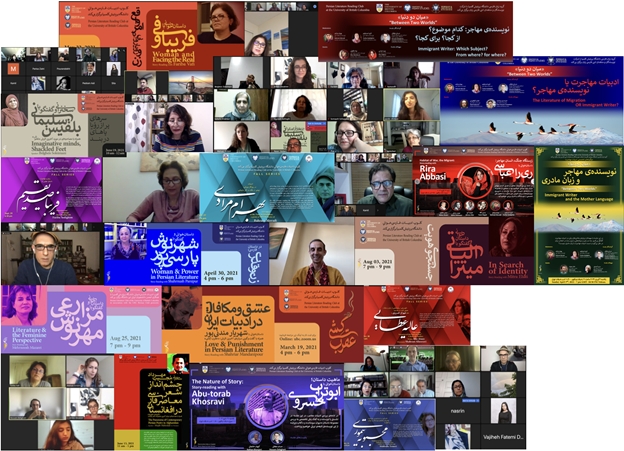
Poster from the UBC Persian Literature Reading Club Facebook Page
Every Friday evening for the last year, without break, Dr. Hessam Dehghani sits at his home office desk and launches a Zoom meeting.
In the first few sessions, he’d meet with a handful of his students from UBC’s Persian language program to practise Persian and read modern Persian literature. Over the course of a few months, the virtual room began to fill. His students invited parents, grandparents, and other family and friends from the Persian community in Vancouver. Interested scholars and fellow writers soon began dialing in from Afghanistan, Iran, Europe, and the United States.
What began as an extracurricular reading club has, in little over a year, developed into a robust, international community of modern Persian literature enthusiasts.
“I felt like I was dealing with something extraordinary,” Dr. Dehghani said of the first meetings.
Dr. Dehghani began the group with a simple objective: to use Persian literature to connect students with their heritage. With the help of student volunteers, Dr. Dehghani began holding weekly virtual lessons. Each Friday for a month, he would focus on one work of modern Persian literature. Students came to practise their language skills and discuss issues surrounding Persian culture and heritage.
But the group also had a special incentive: at the end of every month, Dr. Dehghani would invite the author of the work the group was reading to speak to the group. To date, some of their guest speakers have included prominent and award-winning novelists, poets, and writers such as Shahrnush Parsipur, Fariba Vafi, Shahriar Mandanipour, Belgheis Soleimani, Bahram Moradi, Fariba Sedighim, Mitra Eliati, and Abu-Torab Khosravi. The format had become so successful that the authors themselves would join for subsequent meetings.
The opportunity to meet with authors, Dr. Dehghani notes, was integral to the overall learning experience:
“Our students were craving for, were longing for, some connection to their heritage. And then to suddenly have the opportunity to speak in person with some of the leading figures in the literature! They could ask the best novelists of Persian literature their personal questions. It was surreal.”
Since starting in February 2021, the numbers of the reading group’s Facebook friends and Instagram (ubc_plrc) followers have been steadily growing. The reading group has been profiled locally, nationally, and internationally in Persian-speaking media, including Chapar Vancouver News, the Amsterdam-based Tribune Zamaneh, Journal HafteH, a journal based in Montreal and the Persian literature online journal Bang.
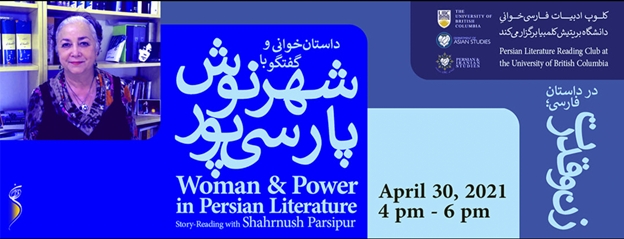
Poster for the April 30, 2021 workshop with Shahrnush Parsipur, titled, “Woman and Power in Persian Literature,” as part of a series of discussions on women’s issues in Persian literature.
Below, Dr. Dehghani shares how he began this project and his goal to build a public oral history database of modern Persian literature.
The following interview has been shortened and edited for clarity:
Heidi Rennert: Tell us a bit about your background. What brought you to public scholarship?
Hessam Dehghani: Since January 2021, I’ve been an Assistant Professor of Persian Language and Culture in the Department of Asian Studies at UBC. I came from a Philosophy background (I have a doctorate in Philosophy from Boston College and did two years of postdoctoral research on Persian and religious identity at Harvard Divinity School and Harvard’s Center for Middle Eastern Studies). Early on in my time at UBC, I was struck by the fact that my students formed a special community and I wanted to use my background in philosophy and Persian culture, heritage, and identity to benefit them.
HR: Your reading group includes a diverse audience, in terms of students and nonstudents, younger and older generations, communities across time zones, and varying degrees of fluency with reading and speaking Persian. What are the benefits and challenges of this kind of work?
HD: Maybe 95% of these students are from heritage backgrounds, meaning their parents, grandparents, or great-grandparents are from countries such as Iran, Afghanistan, and Tajikistan, or from areas that once or continue to speak Persian. Most of them either speak a little Persian–for example, they watch Persian cinema– or they are fluent in conversational skills but have had barely any formal education in Persian. So, reading and writing are not their strongest suit and, more importantly, for many of them, a Persian class at UBC has been the first place where they have been able to express their unique character as members of the Persian community.
Nonetheless, these students are struggling to express themselves in Persian and to connect with their family in a better way. So, I realized that by teaching modern Persian literature, I could help them develop the linguistic resources to express themselves.
We provide a free service, not only to students but also to their families and the wider immigrant community in Vancouver. I want people to see UBC as a place where the Persian community can gather and share their culture.
HR: What does this project mean for the way we define “public humanities”?
HD: Literature provides a wonderful incentive for people to engage with academia and for academia to reach out from its confined groves towards the public. We have people joining us from remote villages and big cities to share their experiences and to hear the opinion of scholars as well. This is, for me, the benefit of public humanities, i.e. scholars writing and speaking to and for the public and dealing with their real issues rather than scholars publishing for other scholars in journals.
When we are dealing with literature, we are also dealing with humanities issues, like immigration, language and culture. We can use this platform to discuss women’s issues, immigration, identity crisis, the problem of borders, the problem of war, women in war, etc. We’re inviting scholars and authors to listen to and weigh in on the real problems of the community.
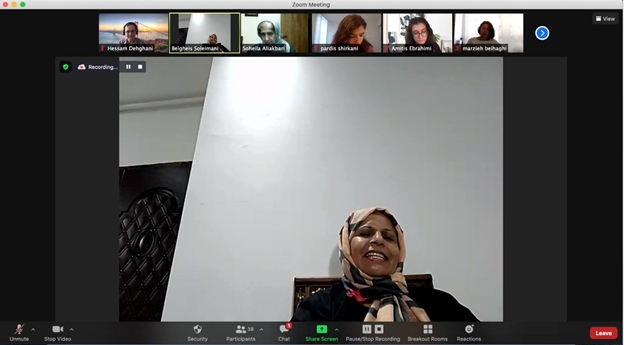
In conversation with novelist Belgheis Soleimani
Moreover, for us, literature provided this safe space where we didn’t have to talk about politics and be stuck and occupied with our differences. Rather, it’s a safe space where we can exercise being a community in conversation.
Plus, Persian language itself is a uniting and integrating space. Persianate culture lies beyond political borders. I’m from Iran myself, but I’ve also invited some of the best poets and writers from Afghanistan. Early on, I invited Mujib Mehrdad, an Afghan poet and journalist, one of the greatest poets of modern Persian literature. I noticed he had a new poetry collection out which was about people and war in Afghanistan. It is noteworthy that after I invited him that very book won the prestigious Annual Shamlou Award for Poetry in Iran.
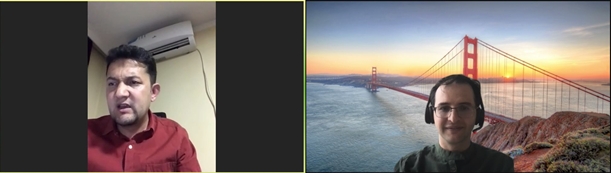
In conversation with the poet and journalist, Mujib Mehrdad
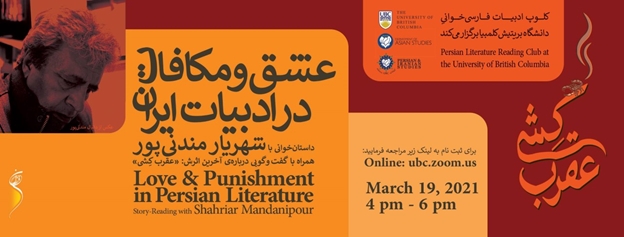
Poster for a March 19, 2021 reading with Shariar Mandanipour, titled “Love & Punishment in Persian Literature”
HR: You started with a local project for the Persian community in Vancouver, but now it’s taken a global presence. How do you see the future of this project serving both the Vancouver and larger international community?
HD: I hope that the UBC Persian program can be an example of using the humanities to address the real issues of the community. Thanks to Zoom, and thanks to our volunteers and social media, we can start to connect with the Vancouver community. I want to see the day that the Persian community across Metro Vancouver takes the trip to come to sit in our events.
Very early on I was struck by the diversity of our audiences. I try to manage this by thematizing the sessions and thematizing the work. At the beginning most of my students were female, so our first sessions focused on women’s issues and women’s rights. This year we are dealing with literature of migration and exile. So, not only are we reading literature and expanding literacy, we are also dealing with issues about the border, migration, war, and education.
HR: What are the next steps for this project?
HD: I’m actually looking for sponsors now. We have a team of Persian enthusiasts but we really need resources to develop and expand our reach. We are speaking with authors who didn’t actually have a lot of media presence, who were marginalized because they were immigrants as a result of war or other reasons. We’re taking them out of the margins and putting them in the center.
I want to start an oral archive of modern Persian literature to document through interviews the works that these authors are doing. Through interviews, the archive would introduce today’s authors of Persian literature and talk and analyze their works with a panel of experts.
We have built a very good resume. We have a good presence in the media. Some of the best authors of Persian literature trust us. As far as I know, an archive of this kind would be unprecedented.
For more information and upcoming events, please visit UBC Persian Literature Reading Group’s Facebook page.
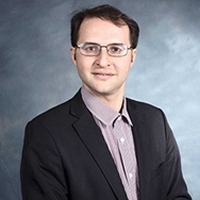 Dr. Hessam Dehghani is an assistant professor of teaching in Persian literature and culture in the UBC Asian Studies Department. For more information on his work and to get in touch with him, visit his faculty page.
Infographics as Public Scholarship
DATE: March 24, 2022
TIME: 1:00pm – 2:30pm
LOCATION: Zoom

This moderated discussion will focus on infographics as a form of public scholarship. Panelists will reflect on and consider a range of topics:
- Data storytelling through infographics
- Using infographics as a pedagogical tool
- Infographics as a genre of scholarly communication
- Knowledge Mobilization through infographics
This event is free and open to the public, but registration is required. The conversation will be hosted via Zoom. A link to the event will be sent to the email given in your RSVP.

Kirby Manià earned a PhD in English from the University of the Witwatersrand (Johannesburg, South Africa) and holds a Master of Arts in Modern Literature and Culture from the University of York (United Kingdom). She has taught courses in the environment, literary studies, and academic writing at universities in South Africa and Canada. Her research focuses on the crossover between urban spaces, literature, and the environment. She is particularly interested in post-apartheid South African literature, urban ecologies, environmental justice, postcolonial ecocriticism, and writing pedagogy. Recent examples of her scholarly work can be found in English Studies in Africa and The Journal of Commonwealth Literature. She also writes poetry and co-edits an eco-urban poetry journal called SPROUT (https://sproutpoetryjournal.com/).
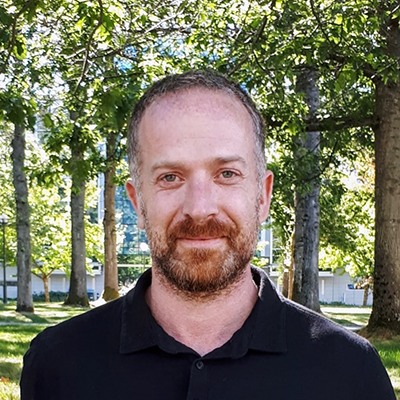
Evan Mauro is a Lecturer in the Coordinated Arts Program and Department of English at UBC. His research is in cultural studies and critical theory, American literature after 1865, global modernisms, and critical university studies, and appears in Fast Capitalism, TOPIA, and Mediations.
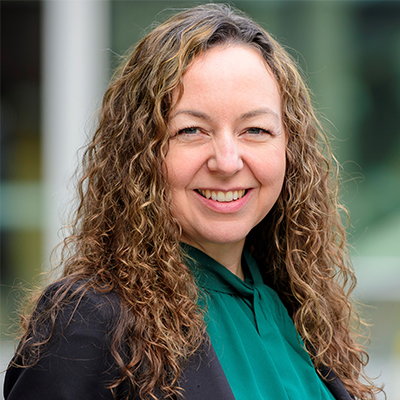
Lupin Battersby, PhD, is Simon Fraser University’s Knowledge Mobilization (KM) Officer. She is responsible for achieving the goals of the SFU KM Hub, including providing training, expert consultations, and recognition of KM work. Her KM fire was sparked almost 20 years ago when holding two contracts, one as a clinical counsellor, the other a research assistant, she noticed first-hand the gap between research and practice. Since that time, she has worked in roles in and out of academia with a primary focus on the challenges and opportunities to mobilize research in various areas including health services, mental health, housing, aging, and patient engagement.
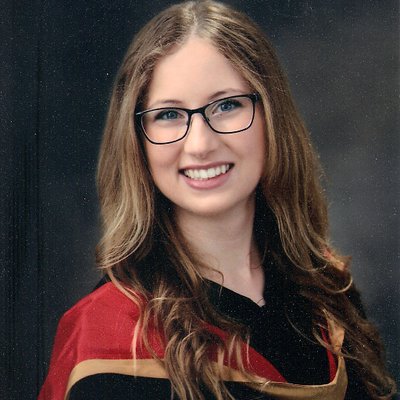
Valerie Hruska is a PhD Candidate in Human Health & Nutritional Sciences researching stress at the University of Guelph. She is the Knowledge Mobilization Strategist and podcast coordinator for Guelph Family Health Study and is passionate about science communication.
Co-moderators
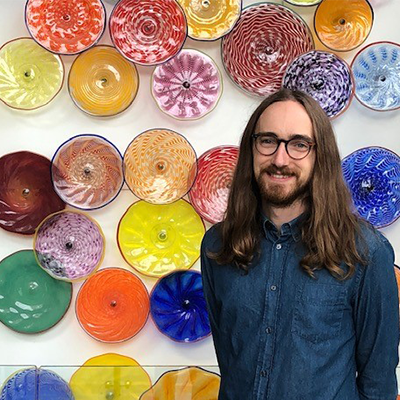
Nick Ubels (he/him) joined the Learning Centre in April 2020 in a pilot position embedded at the UBC Learning Exchange in Vancouver’s Downtown Eastside. Nick graduated with a Master of Library and Information Studies degree from the UBC iSchool in 2019. His previous professional experience includes roles in public and academic libraries, non-profit event planning, and multi-media. Nick believes that libraries can have a transformative impact when their work is community-led and focused on equity, diversity, and inclusion.
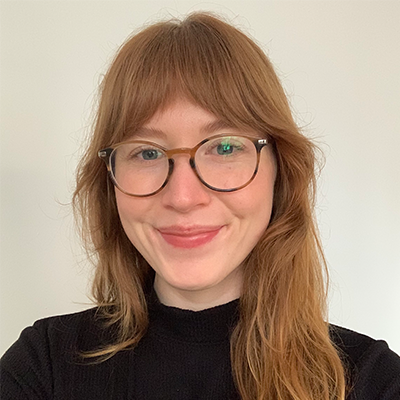
Shannon Murray is a (soon-to-be) MLIS graduate who has concentrated her studies on public librarianship and community engagement. Before pursuing librarianship, Shannon studied English at Simon Fraser University (M.A) and Mount Royal University (B.A Hons). Shannon currently works as the Making Research Accessible Initiative Student Librarian with the task of collection development for the Downtown Eastside Research Access Portal (DTES RAP) and as a Graduate Academic Assistant for Supporting Transparent & Open Research Engagement & Exchange (STOREE).
This panel is co-hosted with the UBC Learning Exchange and is part of our Public Scholarship Series. Check our toolkit on “Infographics as Public Scholarship.”