Maliglutit (ᒪᓕᒡᓗᑎᑦ) (Searchers) screening and panel

Maliglutit (ᒪᓕᒡᓗᑎᑦ) (Searchers) screening and panel


DATE: June 21, 2022

TIME: 7:00pm – 9:30pm

LOCATION: The Cinematheque, 1131 Howe Street
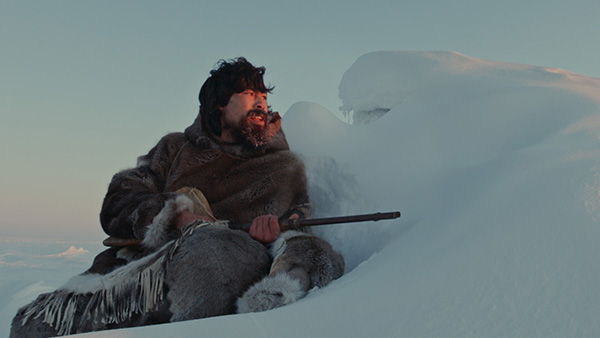

Benjamin Kunuk as Kuanana, seated low looking over a snowdrift into the distance with sunlight on his face, holding a rifle in his lap. Still from Maliglutit via The Cinematheque website, PHOTO COURTESY KINGULIIT PRODUCTIONS INC.

Isuma ᐃᓱᒪ: To Think, To See

  • Maliglutit (ᒪᓕᒡᓗᑎᑦ) (Searchers)
  • Canada 2016
  • Zacharias Kunuk, Natar Ungalaaq
  • 94 min. DCP

The Western goes Northern in Zacharias Kunuk’s masterful third feature, co-directed with Atanarjuat actor Natar Ungalaaq and made through Kingulliit Productions, the successor to Igloolik Isuma Productions. Drawing inspiration from John Ford’s seminal 1954 Western The Searchers (from which Maliglutit takes its English title, sans article), this captivating, crystalline rescue-revenge story, set across the Arctic tundra of 1913 Nunavut, has an Inuk caribou hunter (Benjamin Kunuk) in pursuit of marauders who ravaged his home and abducted his wife. Co-writers Kunuk and Norman Cohn, Isuma principals both, cleverly absorb and undress the archetypes of the Western, telling a generic tale of violent retribution that forgoes the cowboy-“Indian” binary. Cinematographer Jonathan Frantz (also co-producer) captures the immensity of the barren frozen landscape on a scale befitting Ford’s Monument Valley vistas. The cast, many non-actors, is entirely Inuit; Inuk throat singer Tanya Tagaq contributes to the soundtrack. In Inuktitut with English subtitles.

This complimentary National Indigenous Peoples Day screening of Maliglutit is presented as part of ​“Cinema Thinks the World,” a partnership project between UBC and The Cinematheque. Video introduction by Zacharias Kunuk. After the film, there will be a short reception followed by a one-hour panel talk with audience discussion.

Maliglutit panellists are William Brown, Jonathan Frantz, Ilinca Iurascu, and Christopher Rea.

Reviews

“Kunuk has created another timeless fable of the Far North.” – Chris Knight, National Post

“With a tale as timeless as the landscape in which it is set, Canada’s foremost Inuk filmmaker has provided us with another classic.” TIFF

“Immediate and compelling … Ingenious … Its images [are] packed with almost mythic intensity.” Norman Wilner, Now Toronto

“Cinema Thinks the World” is sponsored by the Public Humanities Hub at the University of British Columbia. Through a series of public screenings, panel talks, and discussions, it aims to explore the ways in which global cinema represents and helps us to think about the world.

Shaping Vancouver: The Joyce Food Hub and Transit-Oriented Development


DATE: June 21, 2022

TIME: 7:00pm – 9:00pm

LOCATION: Online via Zoom


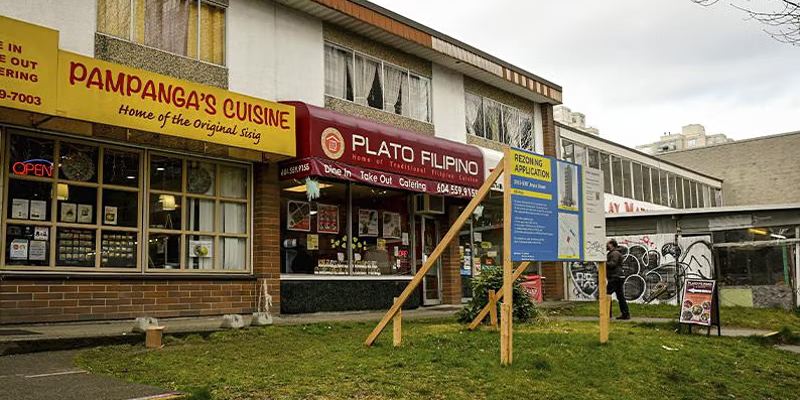
Large City of Vancouver notice of "Rezoning Application" sign erected on grass in front of buildings with yellow and dark red awnings on ground floor: "Pampanga's Cuisine. Home of the Original Sisig" and "Plato Filipino. Dine In. Take Out. Catering." and curtained windows on the second, top floor of the building.

From Heritage Vancouver Society:

Shaping Vancouver returns with our first talk in 2022 on the Joyce Food Hub, community identity and city planning.

A rezoning proposal for 5163-5187 Joyce Street near the Joyce-Collingwood Skytrain station drew a lot of interest in 2021. Covered in the Tyee as Vancouver’s Filipino Heart, attention has been on the cluster of six small businesses facing displacement.

We held an online event in December 2021 about the food hub where two guests shared the importance of the Joyce food hub as a significant place of community service, cultural experience and identity. Claire from Slice Mango Collective and Bennet, the owner of one of the businesses affected, shared some of the stories they felt were important to consider when planning decisions are made about this area.

To follow up, Shaping Vancouver: The Joyce Food Hub, will consider those stories about sense of self and community identity in the context of how neighbourhood and city planning are carried out.

This online panel discussion will cover:

  • How planning practice and development view such stories and understandings of place
  • The idea of centring community knowledge, stories and understandings of the food hub in the planning of the area
  • The demand for cultural equity brought about by the proposed development and displacement
  • The problems in our housing system that contributes to these situations
  • A range of measures that could address potential displacement and their pros and cons

Panelists

Hannah Balba -Settlement Worker at Collingwood Neighbourhood House

William Canero – Director, Kathara Pilipino Indigenous Arts Collective Society and South East Asian Heritage Society

Meg Holden – Professor of Urban Studies, SFU

Neal LaMontagne– Policy Planner and Urban Planning Instructor

JP Catungal – Assistant Professor, Critical Race and Ethnic Studies, UBC

We will also have several community member guests as respondents to the panel discussion.

In partnership with SFU’s Vancity Office for Community Engagement, UBC Asian Canadian and Asian Migration Studies, UBC Public Humanities Hub, Sliced Mango Collective and Alyssa Sy de Jesus.

Shaping Vancouver: The Joyce Food Hub and Transit-Oriented Development image

Goodbye, Dragon Inn film screening and panel


DATE: June 2, 2022

TIME: 7:00pm – 9:30pm

LOCATION: The Cinematheque


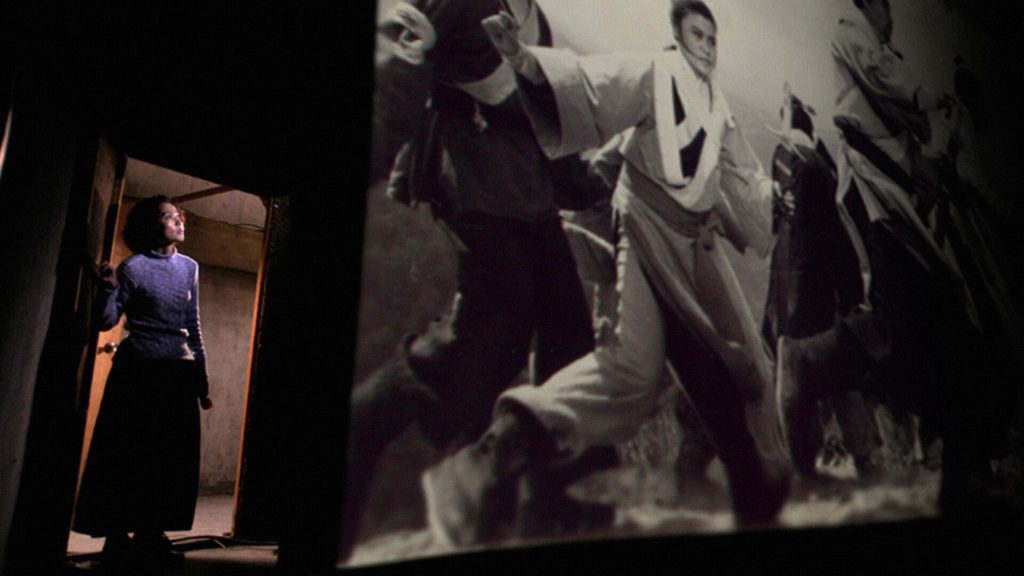
Still from Goodnight, Dragon Inn. Chen Shiang-chyi performs as the ticket taker, illuminated in the doorway of a darkened theatre in which a wuxia film, Dragon Inn, is projected in a large screen

The Public Humanities Hub is pleased to work with the Cinema Thinks the World Research Cluster at UBC and The Cinematheque to offer a limited number of free tickets to the June 2nd film screening Goodbye, Dragon Inn, directed by Tsai Ming-liang (Taiwan, 2003, 82 min), followed by a panel discussion with UBC scholars and filmmakers. Please e-mail us if you’re interested the free tickets. Free tickets are first-come first-served.

Taiwan-based Malaysian auteur Tsai Ming-liang reached formidable new heights with 2003’s Goodbye, Dragon Inn, his spellbinding ode to movie palaces of old and the culture disappearing in their absence. The film, considered by the director to be among his finest, depicts the twilight hours of a once-magisterial Taipei movie house, showing King Hu’s 1967 wuxia classic Dragon Inn before shuttering for good. Few are in attendance; most are appallingly behaved. A Japanese tourist cruises for casual sex in the building’s labyrinthine halls; the manager (Chen Shiang-chyi), hindered by a pronounced limp, searches in vain for the projectionist (Lee Kang-sheng) to offer him a steam bun. Tsai’s minimalist masterpiece—slight on story, immaculate in form—unfolds almost entirely without dialogue, save for the swordplay epic within it. In our present COVID moment, as cinemas reopen but streaming holds sway, Goodbye​’s soulful lament for a vanishing era of mass moviegoing carries particular poignancy.

Dragon Inn, King Hu’s legendary martial-arts picture, figures prominently in Goodbye, Dragon Inn. Experience both films, back to back, June 3, 4 & 6.

“Eerily exquisite … A nearly wordless, perfectly made moviegoing ballad … Tsai Ming-liang, in addition to being a sterling director, is a superior magician.” Wesley Morris, Boston Globe

“A movie of elegant understatement and considerable formal intelligence.” J. Hoberman, Village Voice

The June 2 screening of Goodbye, Dragon Inn is presented as part of ​“Cinema Thinks the World,” a partnership project between UBC and The Cinematheque. After the film, there will be a short reception followed by a one-hour panel talk with audience discussion.

Goodbye, Dragon Inn panellists are Chelsea Birks, Igor Drljaca, Christine Evans, Helena Wu, and Mila Zuo.

And join us for the next event in the series: Maliglutit.

“Cinema Thinks the World” is sponsored by the Public Humanities Hub at the University of British Columbia. Through a series of public screenings, panel talks, and discussions, it aims to explore the ways in which global cinema represents and helps us to think about the world.