
Fail to Appear screening and discussion
DATE: March 15, 2023
TIME: 6:00pm – 9:00pm
LOCATION: UBC Robson Square

About the Event
Cinema Thinks The World is proud to present a free screening of Fail to Appear (2017), which is the first feature-length film from Antoine Bourges, an Assistant Professor at UBC’s Department of Theatre and Film. The film premiered at the Vancouver International Film Festival and played numerous festivals including Buenos Aires International Film Festival (BAFICI); and the Lincoln Center’s Art of the Real. It was theatrically released in Canada and Mexico.
Lea Caragata (Associate Professor of Social Work, UBC) and Lyana Patrick (Assistant Professor of Health Sciences, SFU) will join filmmaker Antoine Bourges (Assistant Professor of Film Production, UBC) and moderator Christine Evans (Assistant Professor of Film Studies, UBC) for a discussion of Fail To Appear after the screening.
This event is free and everyone is welcome to attend. This is final event of six free screenings held at Robson Square as part of the Cinema Thinks the World series.
About the Film
Canadian new wave fixture Deragh Campbell (Anne at 13,000 ft, Never Eat Alone) shines as an inexperienced Toronto caseworker navigating an arduous and impersonal mental-health system in this understated, formally austere debut feature from writer-director Antoine Bourges, an Assistant Professor of Film Production at UBC. Still acclimating to her new job, Isolde (Campbell) is assigned to a despondent, middle-aged man (Nathan Roder) awaiting a court hearing for petty theft. As Isolde grapples with inadequate resources, bureaucratic protocols, and professional insecurity, she struggles to foster a trusting bond with her client. Bourges, returning to the front lines of social safety net services previously explored in his Downtown Eastside trilogy, frames this quiet drama in measured, uninterrupted, mostly static shots. Campbell impresses with a remarkably lived-in performance; Nikolay Michaylov, chief cinematographer with MDFF (Medium Density Fibreboard Films) lenses.
Event Schedule
6:00 PM: Doors open. Light snacks and beverages will be provided.
6:30 PM: Program begins
6:45 PM: Film starts
8:00 PM: Discussion, Q&A Period
9:00 PM: Program ends
Panelists
Antoine Bourges is a filmmaker and Assistant Professor in the Department of Theatre and Film at UBC. He holds an MFA in Film Production from York University and previously served as an adjunct faculty member at Humber College. Bourges’ work blurs the lines between fiction and documentary, often exploring the impact of systems and institutions on human relationships. His shorts Woman Waiting (2010) and William in White Shirt (2015) have screened at festivals across North America and Europe, including the Berlinale, Toronto International Film Festival, South by Southwest, Museum of Moving Images, Ann Arbour Film Festival, and Indie Lisboa. His mid-length hybrid film, East Hastings Pharmacy (2012), premiered at Centre Pompidou’s Cinéma du Réel, and was presented at numerous festivals and art spaces, such as the Viennale; Montreal International Documentary Festival (RIDM); Entrevues Belfort Film Festival; Melbourne International Film Festival; New York’s Anthology Film Archive; Kasseler Dokfest (Best Film); and DOXA Documentary Film Festival (Best Canadian Film).
Christine Evans’ pedagogic research focuses on bridging film theoretical, psychoanalytic, and ideological approaches with evidence-based scholarly teaching in film and media studies. She has a particular interest in curriculum design, repurposing ‘traditional’ teaching and evaluative practices, and learning technologies. Her discipline-specific research focuses primarily on film theory, Lacanian psychoanalysis, and the work of Slavoj Žižek. Her pedagogic and discipline-specific work has appeared in The Journal of Cinema and Media Studies, Film-Philosophy and The International Journal of Žižek Studies; her book in the series Film Thinks, Slavoj Žižek: A Cinematic Ontology, is forthcoming from Bloomsbury.
Lea Caragata completed her PhD at the University of Toronto, focused on the interplay between land use, social movements and the democratization of public space. Her return to academe to do a PhD followed an almost 20-year career that included grassroots community organizing, social housing development, public policy coordination and public administration in non-profit community organizations and in government. Dr. Caragata continues to blend academic and research interests with her interest and commitment to public policy change and community development. Her book, Not the Whole Story: Challenging the Single Mother Narrative, is an illustration of her participatory, activist work, while her research has examined welfare and labour market changes, critical constructions of resilience and the provisioning roles played by children and youth in low-income families. Other research has focused on citizenship, social movements, gender and social exclusion. Lea contributes to “Canada’s conversation” through her active role as a member of the Educational Review committee of The Walrus magazine as well as having served on numerous non-profit Boards.
Lyana Patrick received her BA and MA from the University of Victoria, where she specialized in Canadian history, film studies and Indigenous Governance. She went on to study Indigenous documentary film at the University of Washington through a Canada/US Fulbright Fellowship. Dr. Patrick completed her PhD at the University of British Columbia in 2019. Her doctoral studies brought together research interests in Indigenous community health and well-being and self-determination in urban health governance models. These interests were informed in part by three years spent completing pre-requisites for medical school and several years working in the BC Government in treaty negotiations. She joined the Faculty of Health Sciences in 2019.
Co-sponsored by UBC Connects at Robson Square, UBC Public Humanities Hub, SFU Faculty of Health Sciences, and UBC School of Social Work.
History writing through the arts: African Europeans, a case study
DATE: March 9, 2023
TIME: 12:30pm – 2:00pm
LOCATION: Buchanan Tower 1112, and virtually via Zoom

The UBC Department of History Colloquium Series brings together scholars who are exploring important methodological, chronological, or geographical issues that challenge the frontiers of our discipline and contribute strongly to our collective discussions.
As part of the 2022/2023 Colloquium series, we are pleased to invite you to a talk by Prof. Olivette Otele (Ph.D., FRHistS, FLSW), Distinguished Professor of the Legacies and Memory of Slavery at SOAS, University of London.
Whether you choose to attend virtually or in-person, please register for the event. A light lunch will be available for in-person attendees who register in advance.
Please note this event is intended for the UBC History Department and graduate students from the Public Humanities Hub, UBC Political Science, UBC English Language & Literatures, Institute for Gender, Race, Sexuality, and Social Justice, and the Peter A. Allard School of Law.
Talk Abstract
The histories of people of African descent we learnt in schools in Europe and North America usually start with the slave trade, or worst yet, only with the abolition of slavery. In Britain and France, they tend to begin with post world wars migrations from people from the Global South as former colonized communities.
This presentation proposes the stories of people of African descent and their encounters with people of European descent have a much broader lifespan. It begins by examining the delineation between Europe and Africa as stable entities. Though African European stories were not all born in Ancient Rome, this presentation takes Ancient Rome as a starting point to open up the discussion to the notion of sacralization and hierarchization of histories. It also analyzes the links between the gaze and the memorialization.
Why do we need to refer to Ancient Rome as the birth of European civilization? What does taking refuge in Ancient Rome and 18th century artistic creations teach us about racialization and imperial nostalgia? Beauty and exoticization in paintings of grand masters went hand in hand with the denigration of Black bodies in European societies, especially from the 17th century onwards. This presentation looks to the histories of people of African descent through European Arts in order to try and understand history writing processes and how hegemonic discourses that are seemingly inclusive can hide or reproduce inequalities and highlight an imbalance of power.
Speaker Biography
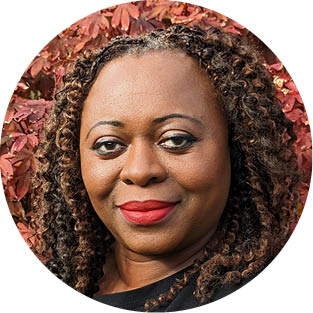
Olivette Otele (she/her/hers), Ph.D., FRHistS, FLSW, is a Distinguished Professor of the Legacies and Memory of Slavery at SOAS, University of London. Her area of research is colonial, post-colonial history and memory studies. Otele holds a Ph.D. in History from Université Paris La Sorbonne, France and received an honorary doctorate in Law from Concordia University in Canada. She is a Fellow and former Vice President of the Royal Historical Society. She was a judge of the International Man Booker Prize, has written numerous scholarly papers and books, and is also a regular contributor to the press, television and radio programmes, including the BBC, Times Magazine, The Guardian, GQ, Elle Magazine, and others. Otele is also a broadcaster and a film and documentaries consultant. Her latest books include an edited volume, Post-conflict memorialization: Missing Memorials, Absent Bodies (Palgrave Mcmillan, 2021) and African Europeans: An Untold History (Basic Books, 2022).